
Moonshot AI shakes up the global AI race
The United States’ dominance in advanced artificial intelligence is facing a major challenge after a new Chinese model reached the performance level of some leading American systems while offering a significantly lower cost.
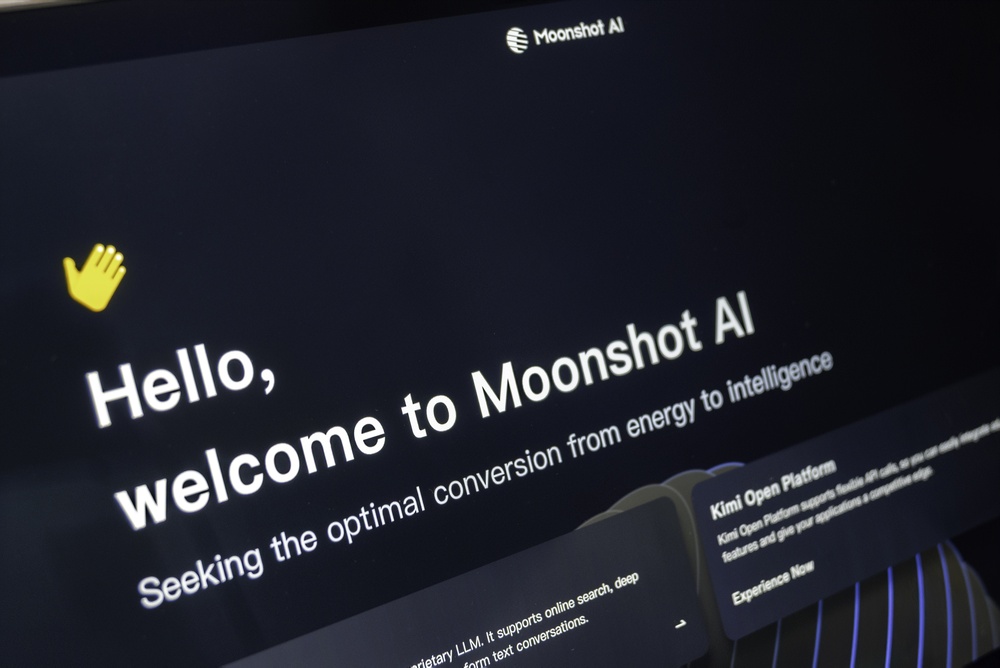
Kimi K3, developed by Beijing-based Moonshot AI, has quickly emerged as one of the most competitive AI models worldwide. Its release has surprised developers, drawn attention from Silicon Valley and raised new questions about whether China has closed the gap with the US much faster than expected.
Kimi K3 reaches top global rankings
According to AI evaluation platform Arena, Kimi K3 surpassed Anthropic’s Fable 5 and OpenAI’s GPT-5.6 Sol in front-end coding tests, placing it among the highest-performing artificial intelligence systems currently available.
In broader text-based rankings, Kimi also moved ahead of Anthropic’s Opus 4.8, a previous flagship model, while operating at a cost around 40% lower.
Unlike many premium US-developed AI models, Moonshot plans to release Kimi as an open-weight system on July 27. This approach will allow companies, researchers and governments to modify the model and operate it on their own infrastructure.
China closes the AI gap faster than expected
For much of the past year, US technology leaders and policymakers believed China remained several months behind the American AI frontier.
Earlier assessments suggested Chinese models were roughly six to twelve months behind leading US systems. In April, a US government AI testing group estimated that Chinese company DeepSeek’s latest model lagged approximately eight months behind the most advanced American platforms.
The arrival of Kimi K3 suggests that advantage may have narrowed significantly faster than anticipated.
AI analyst Kim Isenberg described the development as a turning point, saying the release could force companies and policymakers to reconsider assumptions about the global AI competition.
Lower cost creates a major advantage
Kimi K3 does not necessarily need to become the single most powerful AI model to influence the industry. For businesses, governments and developers, a system that performs close to the cutting edge while costing less and allowing greater customization could become an attractive alternative.
The model puts pressure on the pricing strategies of major US AI companies and challenges the valuations built around their technological advantage.
It also raises questions about the enormous investments being made in artificial intelligence infrastructure, including hundreds of billions of dollars directed toward data centres and computing capacity.
US AI companies still have significant resources
American AI leaders remain highly competitive and continue developing next-generation systems that could widen the gap again.
Companies such as OpenAI and Anthropic are working on future models, including GPT-6 and Claude Opus 5, that may restore US leadership at the cutting edge.
However, the latest developments highlight a strategic challenge: even if American companies regain the lead, China has demonstrated an ability to catch up rapidly.
Questions over AI technology access and regulation
The emergence of competitive Chinese AI models has also intensified debates over how the United States should protect its position in the industry.
Anthropic has accused Moonshot and other Chinese AI companies of large-scale model distillation, alleging that advanced American systems were used extensively to help train competing models.
Chinese companies have also continued seeking access to advanced Nvidia chips despite US restrictions designed to limit China’s ability to develop frontier AI systems.
The future of the global AI competition
The Trump administration now faces difficult decisions over how to maintain US competitiveness while addressing concerns about artificial intelligence safety and regulation.
Stricter rules could potentially slow American AI companies at a time when Chinese competitors are advancing quickly. Less regulation could allow faster development but increase concerns about the risks associated with increasingly powerful systems.
Restrictions on Chinese AI models could strengthen domestic companies but may also allow alternative systems to gain adoption in international markets.
AI leadership enters a new phase
The release of Kimi K3 demonstrates that the artificial intelligence race is becoming increasingly competitive. The United States may continue pushing the limits of AI development, but global users and businesses now have more choices when selecting advanced AI systems.
The biggest challenge for American AI companies may not be maintaining innovation, but ensuring that technological leadership translates into widespread adoption in a market where lower-cost alternatives are rapidly improving.